
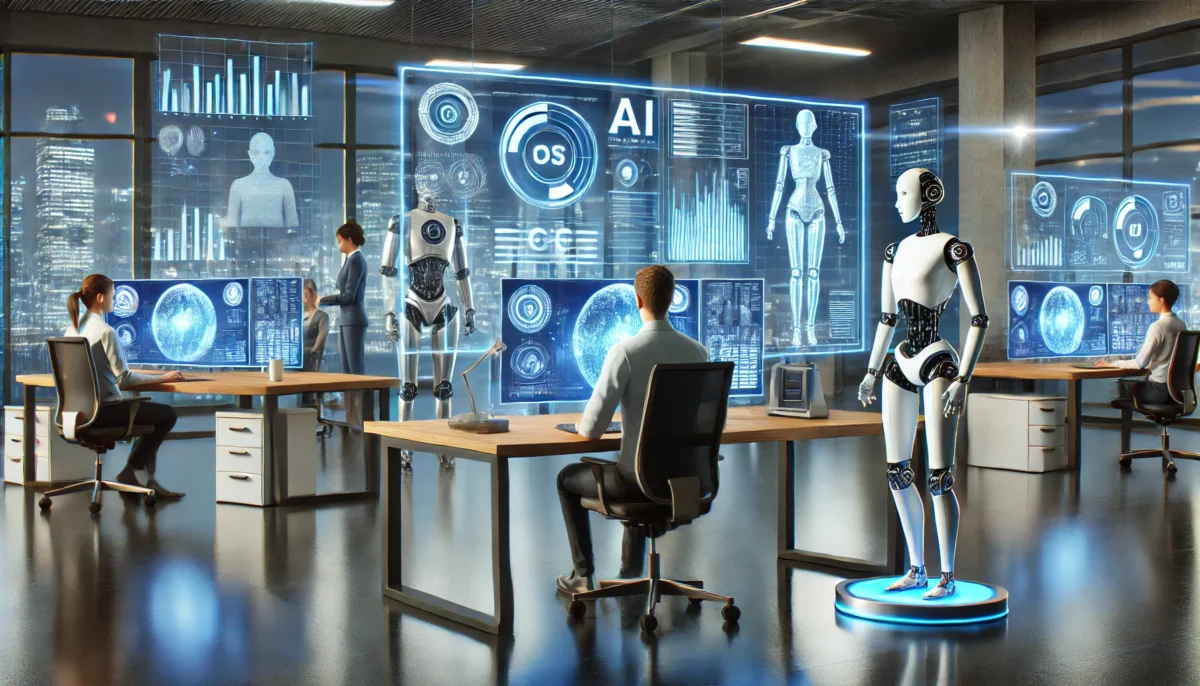
The Future of Work: How AI and Automation Are Reshaping Careers

The workplace is evolving faster than ever, thanks to artificial intelligence (AI) and automation. From chatbots handling customer service to algorithms managing investments, technology is transforming how we work—and what it means to stay employable. A 2024 McKinsey report predicts that 375 million jobs worldwide will be disrupted by automation by 2030. But don’t panic—this shift also creates opportunities for those who adapt. Here’s how to future-proof your career in the age of AI.


The Automation Wave: What’s Changing?

 By the Numbers

  • AI adoption has grown by 270% in the last four years (Gartner).
  • 85% of CEOs say AI will significantly impact their industries by 2025 (PwC).
  • 50% of tasks in manufacturing, retail, and logistics could be automated (World Economic Forum).

Jobs at Risk (and Why)

1. Repetitive Roles

  • Examples: Data entry, assembly line work, basic accounting.
  • Why: AI excels at predictable, rule-based tasks.

2. Middle-Skill Jobs

  • Examples: Telemarketing, clerical work, inventory management.
  • Why: Automation tools like RPA (Robotic Process Automation) handle these tasks faster and cheaper.

3. Driving and Delivery

  • Examples: Truck drivers, delivery personnel.
  • Why: Self-driving vehicles and drones are becoming mainstream.

Emerging Opportunities: Where Humans Thrive

1. AI and Machine Learning Specialists

  • Why: Someone needs to build, train, and maintain AI systems.
  • Skills Needed: Python, TensorFlow, data analysis.

2. Creative and Strategic Roles

  • Examples: Content creators, marketers, UX designers.
  • Why: AI can’t replicate human creativity or emotional intelligence.

3. Healthcare and Caregiving

  • Examples: Nurses, therapists, elderly care.
  • Why: These roles require empathy and adaptability—qualities machines lack.

How to Future-Proof Your Career

️ Upskilling Essentials

  1. Learn AI Basics: Platforms like Coursera and edX offer beginner-friendly AI courses.
  2. Master Data Literacy: Tools like Tableau and Power BI are invaluable for data-driven roles.
  3. Develop Soft Skills: Communication, teamwork, and problem-solving are irreplaceable.

 Adaptability Tips

  • Stay Curious: Follow trends on platforms like TechCrunch or Wired.
  • Network Strategically: Join communities like LinkedIn Groups or Meetup to connect with industry leaders.

Tools to Stay Ahead

Tool Purpose Why It’s Useful
LinkedIn Learning Skill-building courses Learn in-demand skills at your own pace.
Kaggle AI and data science projects Practice with real-world datasets.
FutureLearn Career-focused certifications Affordable courses from top universities.

Expert Insights: Thriving in the AI Era

“The jobs of the future won’t just require technical skills—they’ll demand adaptability and a growth mindset.”
– Satya Nadella, CEO of Microsoft.

“Automation isn’t about replacing humans; it’s about augmenting our capabilities. Focus on what makes you uniquely human.”
– Fei-Fei Li, AI Pioneer and Stanford Professor.


Real-Life Success Stories

1. From Cashier to Data Analyst

Sarah, a former retail worker, used Google’s Data Analytics Certificate to transition into a high-demand tech role.

2. AI-Powered Entrepreneur

Jake, a graphic designer, learned AI tools like Canva’s Magic Design to automate repetitive tasks, freeing time for creative projects.

Read also Cyber Threats in Everyday Life: How to Protect Yourself


The Bottom Line

The future of work isn’t about competing with machines—it’s about collaborating with them. By embracing lifelong learning, honing uniquely human skills, and staying ahead of trends, you can turn automation into an opportunity, not a threat.
How Generative AI Affects Critical Thinking: What Research Found

Critical thinking is a vital skill in today’s world, but how does generative AI impact our ability to think critically? A recent study explored this question, revealing fascinating insights into how people perceive AI’s influence on their thinking processes. Let’s break down the findings and what they mean for you.


What Is Critical Thinking?

Critical thinking is about thinking clearly, logically, and effectively. It involves evaluating our own thought processes against standards like precision, clarity, accuracy, and relevance. However, our thinking can be influenced by personal biases, existing beliefs, and incomplete mental models.

The study used a framework developed by Benjamin Bloom in 1956 to define critical thinking. Bloom’s framework organizes thinking skills into levels, starting with basic skills like remembering information and moving up to advanced skills like analyzing and evaluating information. While this framework is simple and easy to use, it has been criticized for assuming that higher-level thinking skills depend on mastering lower-level ones. In reality, thinking doesn’t always follow this hierarchy.


The Role of Generative AI in Shaping Critical Thinking

Generative AI tools, like ChatGPT, often follow a structure similar to Bloom’s framework when producing outputs. This raises an important question: Is generative AI shaping how people think about critical thinking?

One key issue is that Bloom’s framework misses a crucial aspect of critical thinking: the desire to find the truth. A critical thinker not only uses thinking skills but uses them well because they care about accuracy and truth. AI systems, on the other hand, don’t have this intrinsic motivation.


Key Findings from the Study

The study surveyed 319 professionals, including healthcare workers, educators, and engineers, who used generative AI to complete 936 tasks. Here’s what the researchers discovered:

1. Critical Thinking Happens During Oversight, Not Execution

Participants reported using critical thinking less while completing tasks with AI and more when reviewing and editing AI-generated outputs. In high-stakes environments, the need to produce high-quality work and avoid mistakes motivated users to think critically during the review stage.

2. Confidence in AI Reduces Critical Thinking

The study found that people who trusted AI more tended to think less critically. On the other hand, those who trusted their own abilities displayed stronger critical thinking skills. This suggests that generative AI doesn’t harm critical thinking—as long as the user already has strong thinking skills.

3. Efficiency Outweighs Oversight Effort

Participants felt that the time saved by using AI outweighed the effort required to review its outputs. While critical thinking was important during oversight, the overall efficiency gains made AI a valuable tool.


Limitations of the Study

The study relied heavily on self-reported data, which can be biased or misinterpreted. Additionally, participants defined critical thinking in terms of task completion—such as setting clear goals and meeting specific standards—rather than broader thinking skills. This raises the question: Was the study really measuring critical thinking, or just task efficiency?


How to Become a Better Critical Thinker

The study highlights the importance of critical thinking when using generative AI. Here are some steps you can take to improve your critical thinking skills:

1. Question Assumptions

Challenge unstated assumptions behind claims and ideas. Ask yourself: What evidence supports this? Are there alternative explanations?

2. Evaluate Diverse Perspectives

Consider different viewpoints and weigh their merits. This helps you avoid biases and think more objectively.

3. Practice Systematic Reasoning

Use structured methods to analyze information and solve problems. Collaborate with others to test your ideas and refine your thinking.

4. Use AI as a Tool, Not a Crutch

Generative AI can be a powerful tool, but it shouldn’t replace your critical thinking. Use it to challenge yourself and enhance your reasoning, not to do the thinking for you.


Can Generative AI Improve Critical Thinking?

Just as chalk and chalkboards helped us get better at math, generative AI might help us improve our critical thinking—if we use it carefully. By challenging us and providing new perspectives, AI could augment our thinking skills. However, the responsibility lies with us to ensure we’re using AI thoughtfully and not letting it do the thinking for us.


Final Thoughts

Generative AI is here to stay, and its impact on critical thinking depends on how we use it. By becoming a critical thinker first, you can harness the power of AI without compromising your ability to think clearly and independently. Remember, the goal isn’t just to complete tasks efficiently—it’s to think well and make informed decisions.

What are your thoughts on generative AI and critical thinking? Share your opinions in the comments below!

For more articles like this Explore.